|
|
|
|
||||||||||||||||
|
||||||||||||||||||
| Sign
up now for Take a Veteran to School Day Sign up now for Take a Veteran to School Day! This popular program links veterans of all ages with young people in our schools and communities. HISTORY™ is encouraging schools throughout the country to organize Take a Veteran to School Day events in the weeks leading up to Veterans Day, November 11th. These programs can range from a simple one-class visit with veterans to an all school assembly. Visit http://www.veterans.com to register for this program and to view or download sample agendas, how-to guides, and a wealth of free curriculum resources. Register today to receive 30 colorful Take a Veteran to School Day wristbands (available while supplies last). Looking for a special Veterans Day project? HISTORY has teamed up with StudentPublishing.com to create a unique way for students to honor veterans. Students create books for visiting veterans, using their own drawings and words. Visit us online here for easy instructions on how to get started on this fun and meaningful classroom project! This is an ideal project for younger students. If you have any additional questions or feedback, contact us at veterans@aetn.com. From the latest generation to the greatest generation, let’s support our vets! |
||||||||||||||||||
|
||||||||||||||||||
| Columbus: The Lost Voyage
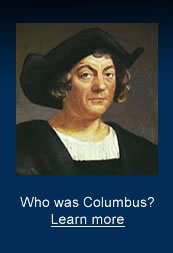
Sunday, October 12th at 10am/9c Ten years after his famous 1492 voyage, Christopher Columbus awaited the gallows on criminal charges in a Caribbean prison. He plotted an escape, planning a voyage that he hoped would restore his reputation. Instead, his last and most treacherous journey ended with the loss of all four of his ships and with Columbus and his crew shipwrecked. In Columbus: The Lost Voyage dramatic reconstructions and insightful interviews with historians give viewers a new look at Columbus and his era. Educators and students will explore how and why Columbus landed on the lush shores of Central America, travelled to a remote beach in Jamaica, and finally, fought his own mutineers in the jungle. This program tells a little-known but critical story about Columbus and his role in the age of exploration. Primary source material and colorful maps give students new perspective on a historical figure often shrouded in myth. Curriculum Links: Columbus: The Lost Voyage would be useful for History, Global Studies, Geography, and Social Studies courses. It is appropriate for 11th grade and above. Read more about Christopher Columbus from History.com: History of Columbus Day Related Videos: The Man and Myth Columbus' Ships Are Marvels of Engineering |
||||||||||||||||||
|
||||||||||||||||||
| Listen to a special Hispanic Heritage Month podcast from BackStory With the American History Guys! BackStory is a public radio program that brings historical perspective to the events happening around us today. On each show, renowned U.S. historians Ed Ayers, Peter Onuf, and Brian Balogh tear a topic from the headlines and plumb its historical depths. For Hispanic Heritage Month, the BackStory guys recorded a special podcast for History.com, presenting an in-depth look at the history of the US-Mexico border. Officially, the line on the map was drawn after the Mexican-American War ended, but the border has never been clear-cut. In Part 1, the History Guys discuss the ways that war transformed 18th century “borderlands” into “the border.” And in Part 2, historian Kelly Lytle Hernandez — author of Migra! A History of the U.S. Border Patrol — explains why the idea of “border security” we hear about today has its roots in the 1920s. Listen to this podcast! Visit the BackStory home page! |
||||||||||||||||||
|
||||||||||||||||||
| Time Machine: The Dark Ages Wednesday, October 13th at 9/8c By the 5th century, the Roman Empire had conquered a stunning expanse of territories and people throughout Europe. Unable to sustain its own borders, the empire crumbled from within, leaving a power vacuum in its wake. With no unified power, chaos abounded throughout Europe. This downshift in progress left Europeans more susceptible than ever to the ravages of natural disaster and disease. Famine, plague, erratic weather patterns and persecution led to a centuries-long era of economic, political, and cultural decline. The Dark Ages traces this tumultuous era, recounting the stories of significant leaders and events. Glimmers of hope emerged in the form of monks, benevolent rulers, and small examples of scientific and legal progress. Yet despite these flickers of brightness, chaos dominated the European landscape for decades. This one-hour program traces the rise of major leaders and conflicts from Greece and Turkey in the east to France and Spain in the west. With compelling commentary from historians, students will gain a fascinating view of the critical historical era between the glory of Rome and the onset of the Medieval era. Curriculum Links: The Dark Ages is a useful program for History, Global Studies, Social Studies and Religion courses. This documentary is appropriate for 8th grade students and above. Due to some strong language, situations, and images, we recommend that teachers view the program before showing it to students. Discussion Questions:
|
||||||||||||||||||
|
||||||||||||||||||
| How the States Got Their Shapes Saturday, October 16th at 4:30/3:30c Most Americans are familiar with the map of United States, but do we know why our states look the way they do? Every shape on the map tells a great story about our past. Why is California bent and why does Oklahoma have a panhandle? Viewers will learn about how borders were determined because of heated dynamics like the shifting boundaries of slavery, and unexpected events such as earthquakes. How the States Got Their Shapes blends geography and history, showing how state borders have been affected by political debate and the natural world. With commentary from historians and compelling visuals, this one-hour program gives teachers and students an informative and unique window into the American past. Curriculum Links: How the States Got Their Shapes would be useful for classes on U.S. History, American Culture, Social Studies and Geography courses. It is appropriate for 7th grade and above. Teacher’s Guide Available: http://www.history.com/images/media/pdf/IdeaBook_How_States_Shapes.pdf More from History.com: Can you Place The State? Challenge yourself to see how well you know the U.S.! Beginner, intermediate and expert levels available |
||||||||||||||||||
|